Why CCTV is not a one-off project, but a lifecycle
Most CCTV systems work fine until suddenly they don’t. Not because of one big mistake, but because of years of small decisions that have never been reviewed. That’s why a

Many CCTV systems fail not because the cameras are bad or because the software is flawed. A CCTV system fails because no one has ever determined how the system should behave when it comes down to it. This is not a technical detail, but an architectural question.
Many security issues start with a recognisable thought: ‘We need more visibility.’ The solution then seems logical: more cameras, higher resolution and more storage. What is often forgotten is that a CCTV system is a coherent whole. Cameras, network, servers, storage, software, management and usage are directly dependent on each other.
Without a clear architecture, such a system grows organically. Growing organically in security often means only one thing: unpredictable behaviour.
In projects we take over or analyse, we see the same patterns:
These are not incidents, but symptoms of a missing design in outline. A CCTV system should work not only today, but also tomorrow. And three years from now. Under pressure, during maintenance and during an incident.
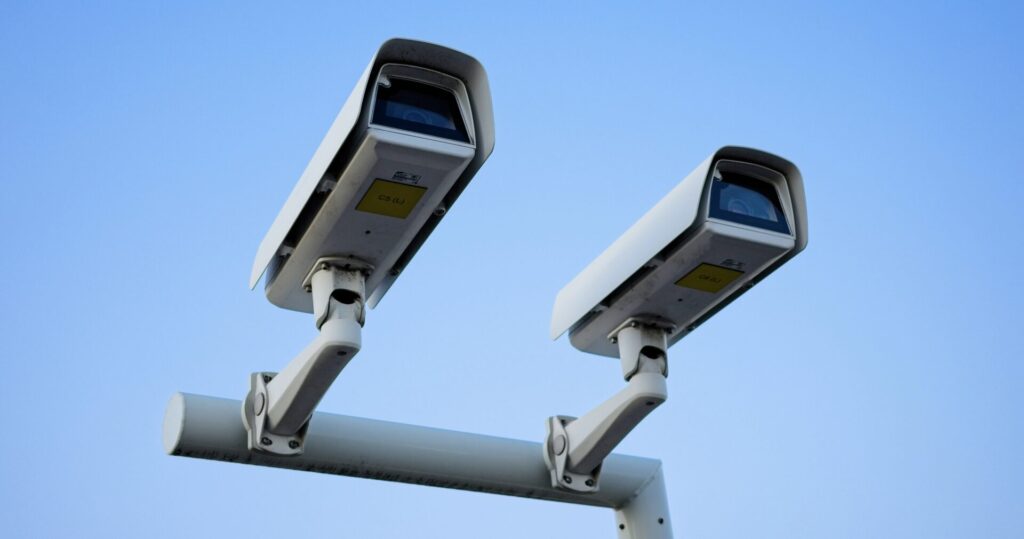
In an industrial environment, a camera system was expanded from 80 to over 200 cameras. The hardware was in order and the software was running stably. Yet the system crashed during peak loads.
The cause turned out to be simple: the original design was never intended to scale. No architecture choice had been made for growth. So the problem was not in the technology, but in the lack of a foundation.
Good architecture is not about complexity, but about conscious choices. Questions to ask yourself include:
You cannot answer these questions by just looking at products. They require insight. In professional environments, such as industry, marine applications or high-end real estate, this difference is decisive.
A video management platform such as Milestone XProtect forms the backbone in this. Not as a tool, but as an architectural basis. The platform defines:
Without a clear architecture, even the best platform is limited in its capabilities.
When we take architecture seriously from the start, the dynamics change:
The system supports the organisation rather than the other way around.
If you take one thing away from this blog, let it be this: don’t start with cameras, start with scenarios. Ask yourself:
Those answers are the basis of architecture. Not the specifications of a product.
A CCTV system rarely fails because of one wrong choice. It fails because of the lack of a coherent design. Architecture is not a luxury, but a prerequisite. Those who understand this build systems that keep working. Even when the chips are down.
Are you facing a new CCTV project, an expansion or a system that raises more and more questions? Then it makes sense to look at the architecture before investing further. At DZ Technologies, we like to think along with you. Calm, substantively and without obligation.
Feel free to contact us to discuss your issue.
Architecture describes how all the components of a CCTV system are related and behave under different conditions. It is not just about cameras or software, but the relationship between network, servers, storage, management and usage. Good architecture determines what happens during growth, maintenance and incidents.
Many systems are designed for the initial scope. When the number of cameras grows or usage changes, the design proves not scalable. Without architecture choices for growth, performance issues, instability and unexpected behaviour arise.
No. Redundancy without a clear architecture often only shifts the problem. Without scenarios and agreements on what should continue to work, uncertainty arises in case of failure or failover. Architecture is about predictability, not just duplicate components.
A solution usually focuses on directly answering a question, for example ‘more visibility’. Architecture looks ahead: how will the system continue to work in the face of growth, maintenance and incidents. Without architecture, every expansion becomes a new problem.
A system is future-proof when:
– growth is factored into the design
– management and responsibilities are clear
– updates and maintenance can take place without stress
– the behaviour in case of failures is predictable
This is not a product feature, but a design choice.
A video management platform forms the backbone of the system. It determines how flexible the design is, how integrations are possible and how availability is set up. Without a clear architecture, we limit the capabilities of even a powerful platform.
Architecture is especially crucial in environments where:
– continuity is important
– multiple disciplines work together
– downtime has a direct impact
Think industry, maritime applications, superyachts and high-end real estate.
Don’t start with technology, but with scenarios. Ask yourself questions like:
– What needs to keep working during an incident?
– Who makes decisions when the system is under pressure?
– What growth do we expect in the coming years?
If these answers are missing, the architecture is probably not sufficiently developed.
An architecture review is useful in the case of:
– extensions
– performance problems
– delayed updates
– unclear responsibilities
Even if the system ‘still works’, a review can prevent many future problems.
No. Existing systems can also be improved architecturally. We often do this in phases, without replacing everything, provided we first create a shared understanding.
Good architecture ensures:
– fewer incidents
– peace of mind for management and operations
– predictable system behaviour
– better decision-making
The system supports the organisation, rather than the other way around.
DZ Technologies helps organisations assess their CCTV environment in terms of architecture, scalability and predictability. Not from products, but from choices and scenarios. Calm, substantively and without obligation.
Most CCTV systems work fine until suddenly they don’t. Not because of one big mistake, but because of years of small decisions that have never been reviewed. That’s why a
High availability in CCTV sounds reassuring. As if simply sticking a label on a CCTV system will make it keep working automatically. In practice, this is where things often go