Why a CCTV system fails without proper architecture
Many CCTV systems fail not because the cameras are bad or because the software is flawed. A CCTV system fails because no one has ever determined how the system should
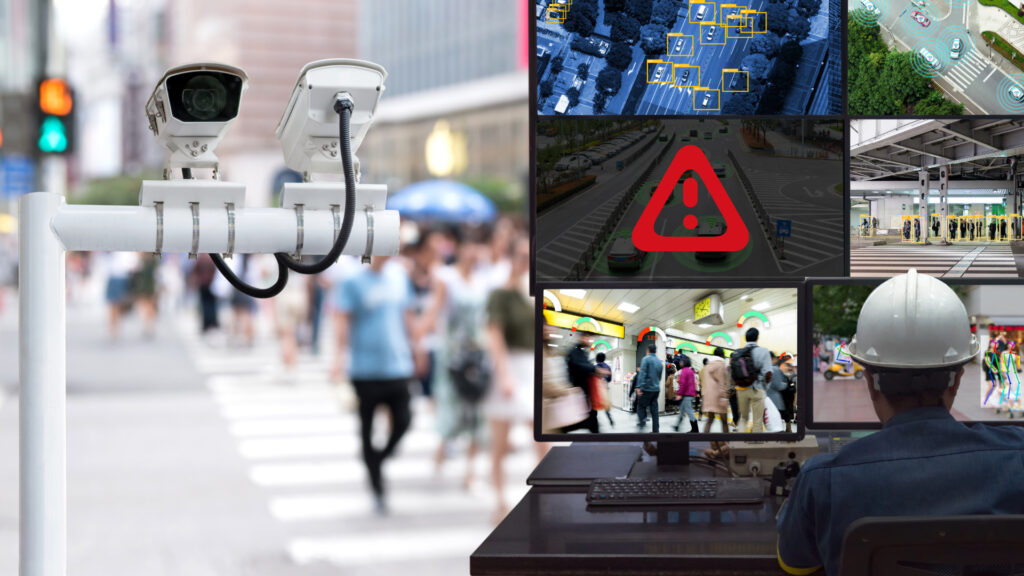
High availability in CCTV sounds reassuring. As if simply sticking a label on a CCTV system will make it keep working automatically. In practice, this is where things often go wrong. Not because the technology fails, but because no one has sharply agreed on what should remain available and when.
Many organisations think of one thing when they think of high availability: ‘The system must not fail.’ This is understandable, but unrealistic. High availability is not about keeping everything always available, but about expectation management. What should continue to work, for whom and under what conditions?
A CCTV system that is briefly not fully available during maintenance may be perfectly acceptable. But a system that does not provide images in the event of an incident is not. The difference is not in technology. It is in design choices.
High availability is often confused with duplication. In other words: two servers, two networks and more storage. Redundancy helps, but without coherent design, the problem only shifts.
In practice, we regularly see:
On paper it works, but in practice it doesn’t.
In a maritime environment, high availability had been ‘tuned in’. Redundant hardware was in place and failover was on. During a network failure, the system technically kept running, but operators no longer saw live images.
The conclusion after the analysis was simple: no one had ever established which functionality was crucial during an incident. High availability was technically present, but operationally absent.
The key question is not: ‘How do we make everything redundant?’
The real question is: ‘What may happen if something fails?’
Consider scenarios such as:
High availability is thinking through these situations in advance and then designing architecture accordingly. Not everything has to keep working, but what is crucial must be predictable.
A video management platform like Milestone XProtect offers many features for high availability, but those features are not a default setting. The value is in:
Without clear choices, high availability remains a theoretical concept. With the right choices, it becomes a manageable and reliable system.
If you want to take one step towards true high availability today, start here:
Ask this question internally: ‘Which functions should continue to work during an incident, and which may be temporarily lost?’
If there is no unequivocal answer to this, high availability exists only on paper.
In sectors such as industry, maritime applications and high-end environments, downtime is not an abstract risk. It directly affects operations, security and trust. There, high availability is not a technical luxury, but a prerequisite for peace of mind. Not because everything must always keep running, but because everyone knows what happens when it does not.
High availability is not a checkbox. It is the result of conscious choices, scenario thinking and realistic expectations. Those who set this up properly avoid surprises. Those who skip it often only discover the consequences at the worst possible moment.
Do you doubt whether you have really prepared your CCTV environment for failure, maintenance, or growth? Or does high availability mainly feel like a promise on paper? At DZ Technologies, we like to look at the practice behind the design. Without assumptions and without sales pitches.
Feel free to contact us to discuss your situation.
High availability in CCTV means that you clearly define in advance which parts of the video system must remain operational during failures, maintenance, or incidents. It is not about keeping everything online at all times, but about predictable system behavior in critical situations.
No. Redundancy is only one component of high availability. Without clear design choices and defined scenarios, redundancy can actually introduce new risks. High availability is about architecture, expectations and system behavior, not just duplicate hardware.
This starts with scenario-based thinking, not technology. Ask questions such as:
– Which video streams are essential during an incident?
– Who must retain access to the system?
– Which functions may be temporarily unavailable?
Without clear answers, high availability exists only on paper.
Architecture determines:
– how system components interact
– where intelligence is placed within the system
– how the system behaves during failures
Without architecture, high availability cannot be controlled or predicted.
Yes. In many cases, you can improve high availability step by step by:
– clearly defining scenarios
– clarifying responsibilities
– revisiting architectural decisions
This requires insight, not necessarily new hardware.
Well-designed high availability provides:
– predictable system behavior
– reduced stress during incidents
– clarity for operators and management
– confidence that the system will perform when it matters
It creates calm, especially in high-pressure situations.
DZ Technologies helps organizations design and implement high availability in CCTV environments in a practical and realistic way. Not based on assumptions or standard templates, but on scenarios, architecture and real-world experience.
Calm, content-driven and without sales pressure.
Many CCTV systems fail not because the cameras are bad or because the software is flawed. A CCTV system fails because no one has ever determined how the system should

Most AI in CCTV solves problems that weren’t there. That sounds sharp, but it is true. AI can add enormous value to video security. Only it is not automatic and